

An intervention that claims scholarly authority must meet the standards of legal accuracy, evidence and constitutional accountability it demands of everyone else.
In a widely circulated talk on migration delivered at a recent academic seminar hosted by the Thabo Mbeki African School of Public and International Affairs at the University of South Africa (UNISA), political commentator Professor Lesiba Teffo opened his contribution by informing the audience that he holds “six degrees, four in philosophy and two in law”. The seminar titled Dynamics of Migration, Development and Social Transformation in South Africa, featured Teffo as one of its key panellists. He said he spoke only for himself, while also describing himself as “a practitioner at Home Affairs”. He instructed younger scholars to approach migration critically, rather than accept what was being said. That is sound advice. It is also the standard by which his remarks should be critiqued. His remarks mix valid concerns about border regulation and administrative failure with demonstrable legal errors, questionable historical claims, and allegations against migrants and rights organisations for which he provides no evidence. In a country scarred by anti-immigrant violence, it was crucial to appraise his comments.
A treaty rule that is not in the treaty
“99 of the countries signed to say first country of safety first” — Teffo
“South Africans fresh from Robben Island and exile, they said, “No, no, that is inhuman.”” — Teffo
Here the problem is no longer simplification but legal misstatement. Neither the 1951 Refugee Convention nor its 1967 Protocol imposes a universal duty to seek asylum in the first safe country reached. UNHCR’s guidance explicitly states that there is no obligation under international law to seek protection at the first effective opportunity. Safe-third-country arrangements can exist, but they are distinct policy and legal mechanisms with conditions and safeguards—not the near-universal Convention command Teffo describes.
Teffo asks us to believe that post-apartheid leaders declined this purported rule in 1994. He says this is “documented” in the negotiations, apparently a reference to CODESA. But CODESA (1991–1992) negotiated a constitutional transition, not refugee policy. South Africa acceded to the OAU Refugee Convention only in 1995, and to the 1951 Convention and its 1967 Protocol in January 1996. Where, then, is the negotiating record? Where is the treaty clause? South Africa enacted the Refugees Act in 1998. It is legitimate to debate whether its asylum system was well designed. Nor did that system simply wave everyone through: the Act excludes anyone who “enjoys the protection of any other country in which he or she is a recognised refugee, resident or citizen” (section 4(1)(d)). It is not legitimate to invent a treaty requirement, attribute its rejection to democratic leaders, then blame that invented rejection for today’s failures.
Sovereignty does not mean discretion without law
“[E]ach country can deny you access without giving you any explanation” — Teffo
Teffo presents this as an exceptional power under the Convention. International refugee law is more exacting. Article 33 sets out non-refoulement protections, with circumscribed exceptions, while Article 32 deals with expulsion of refugees lawfully in the territory and safeguards. South Africa’s own section 2 of the Refugees Act prohibits refusal, expulsion or return in defined circumstances of persecution or grave threats. Nor is it true that South Africa denied itself a national-interest power. Section 28(1) of the same Act permits the Minister to remove a refugee or asylum seeker “on grounds of national security, national interest or public order”, but “subject to section 2”. The law already contains the power Teffo says was rejected. What it does not contain is a power to exercise it without reasons or in breach of non-refoulement. Constitutional legality also restricts arbitrary (mis)use of public power. National interest is not an incantation that extinguishes legal obligations.
A sovereign state exercises power through laws it can administer and defend. South Africa is a constitutional democracy. If the argument is that those laws should change, say so and justify the change. Do not tell the public that the existing law already permits what it does not.
From unverified observations to suspicion of entire communities
“Why did Somalians, Ethiopians, Bangladeshi[s] and Pakistan[is] never bothered for a single moment to go?” — Teffo
“Part of them paid money to run the political parties that you are going to vote for on the fourth.” — Teffo
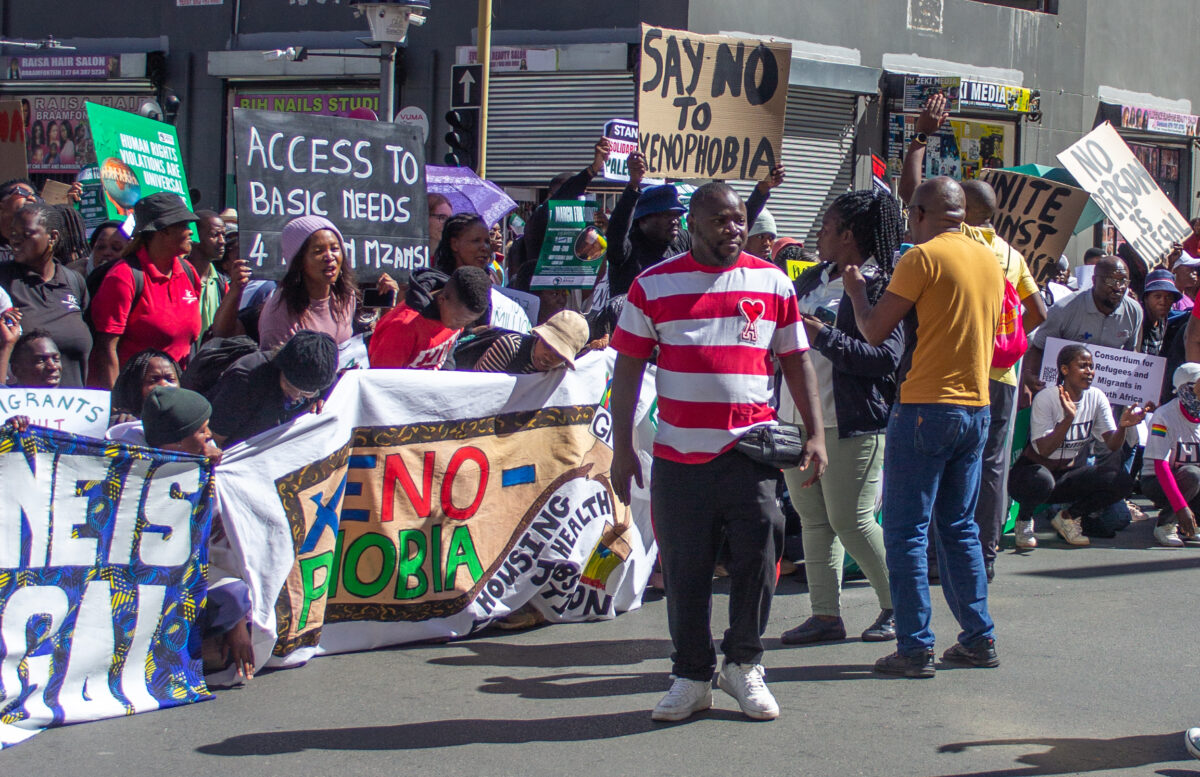
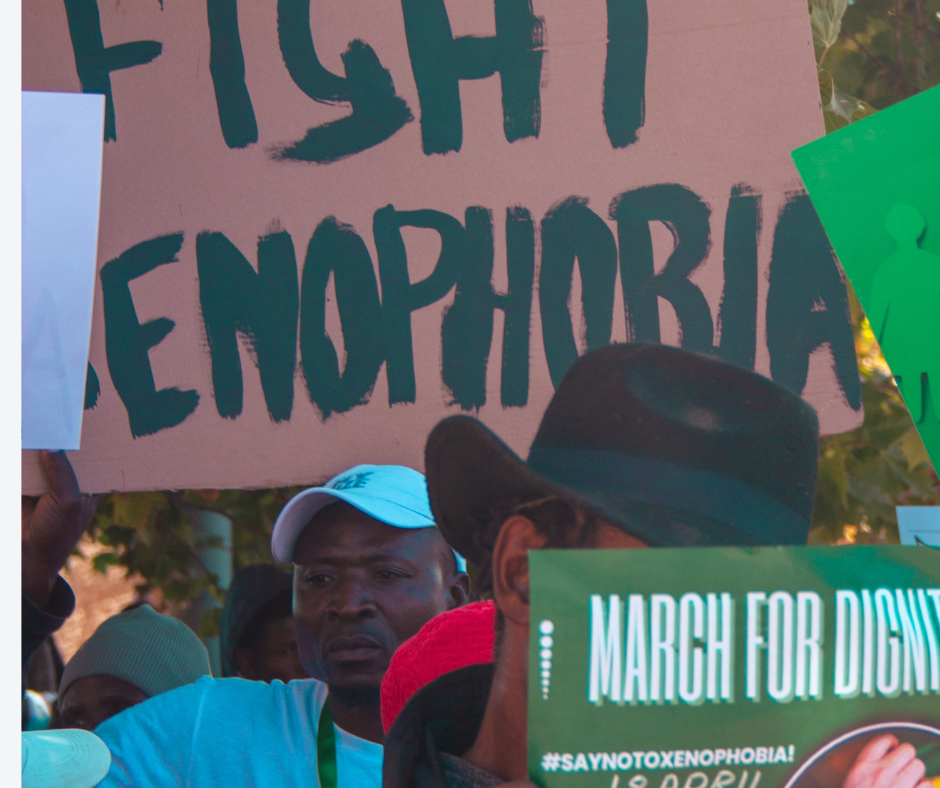
Teffo is referring to the departures of Malawians, Ghanaians, Nigerians, and others ahead of the informal 30 June 2026 deadline associated with anti-immigrant protests. Leaving under threat of mobilisation is treated as the norm; staying becomes grounds for suspicion. These are among the most irresponsible passages. Who left, when, and in what numbers? Which departures were voluntary, compelled or merely reported? What independently verified electoral-finance evidence supports the allegation? Teffo provides no data, documents or named transactions. Instead, a questionable generalisation about four nationalities is used to insinuate hidden political protection.
Investigate any unlawful political donations by citizens or non-citizens, based on the evidence. But using nationality as a proxy for corruption or political conspiracy is neither serious scholarship nor responsible public argument. In the South African context, such insinuations risk making already vulnerable communities objects of suspicion and hostility. The Constitutional Court made the same point to the state itself. In Scalabrini, it rebuked the state’s counsel for “sweeping and unsupported assertions regarding Afghan and Bangladeshi nationals’ involvement in human trafficking”, warning that such remarks risk appearing xenophobic.
Teffo criticises human rights defenders by overlooking the rights violation
“[T]hey take a posture that is anti-government” — Teffo
“The [ConCourt] decision was about Scalabrini is a human rights organisation defending who?” — Teffo
This is where his reasoning clashes most directly with constitutionalism. On 7 July 2026, the Constitutional Court unanimously confirmed the invalidity of sections 4(1)(f), (h), (i) and 21(1B) of the Refugees Act in Scalabrini Centre of Cape Town v Minister of Home Affairs. The Court found that procedural barriers prevented asylum seekers from receiving assessments on the merits; its reasoning addressed non-refoulement, vague discretionary powers and irrationality. Paragraph 110 also criticised the respondents’ exceptionally poor conduct of the litigation. It was the state’s law that failed constitutional scrutiny—not the civil society litigants who asked the Court to examine it.
One may scrutinise who funds rights organisations. One may disagree with their strategies. Neither inquiry answers the Court’s reasoning. Constitutional democracy does not define loyalty as leaving unlawful exercises of public power unchallenged. Access to courts and judicial review are mechanisms by which public officials are held to the Constitution. To present that scrutiny as inherently anti-government encourages distrust of the very institutions charged with protecting everyone’s rights.
Even Home Affairs rejects his apparent escape route
“Let’s get out of out of the protocols and the conventions” — Teffo
Teffo credits this call to former Home Affairs Minister Aaron Motsoaledi, whose 2024 White Paper proposed withdrawing from the Convention and re-acceding with reservations. The irony is striking. The Cabinet-approved Revised White Paper on Citizenship, Immigration and Refugee Protection of March 2026 acknowledges that the government considered withdrawing from the 1951 Refugee Convention and its 1967 Protocol. Following diplomatic consultations and legal assessment, government concluded that this would yield no material benefit, given that the rights contained in the Convention are substantially reflected in South Africa’s Bill of Rights. Importantly, the government has retained its proposal to introduce the First Safe Country Principle through domestic legislation, subject to safeguards against refoulement. This distinction exposes a central weakness in Teffo’s argument: South Africa can pursue more restrictive asylum policies without abandoning its international obligations or constitutional commitments. Moreover, neither withdrawal from international treaties nor the introduction of a first-safe-country rule would, in itself, resolve asylum-processing backlogs, corruption, documentation failures or institutional incapacity. These require effective governance, not performative denunciations of international law.
The crisis is in governing migration—not simply in migrants
South Africa has real migration-governance problems. Enforcement must be credible, status decisions timely, documentation reliable, and public institutions free of maladministration and corruption. The protection of rights and effective borders are not competing principles. They are mutually necessary components of legitimate government. Yet Teffo rarely engages critically with the administrative and institutional failures that produce uncertainty, irregularity and mistrust. Instead, he invites the younger scholars to look towards allegedly permissive founders, shadowy civil society organisations and suspect migrant nationalities.
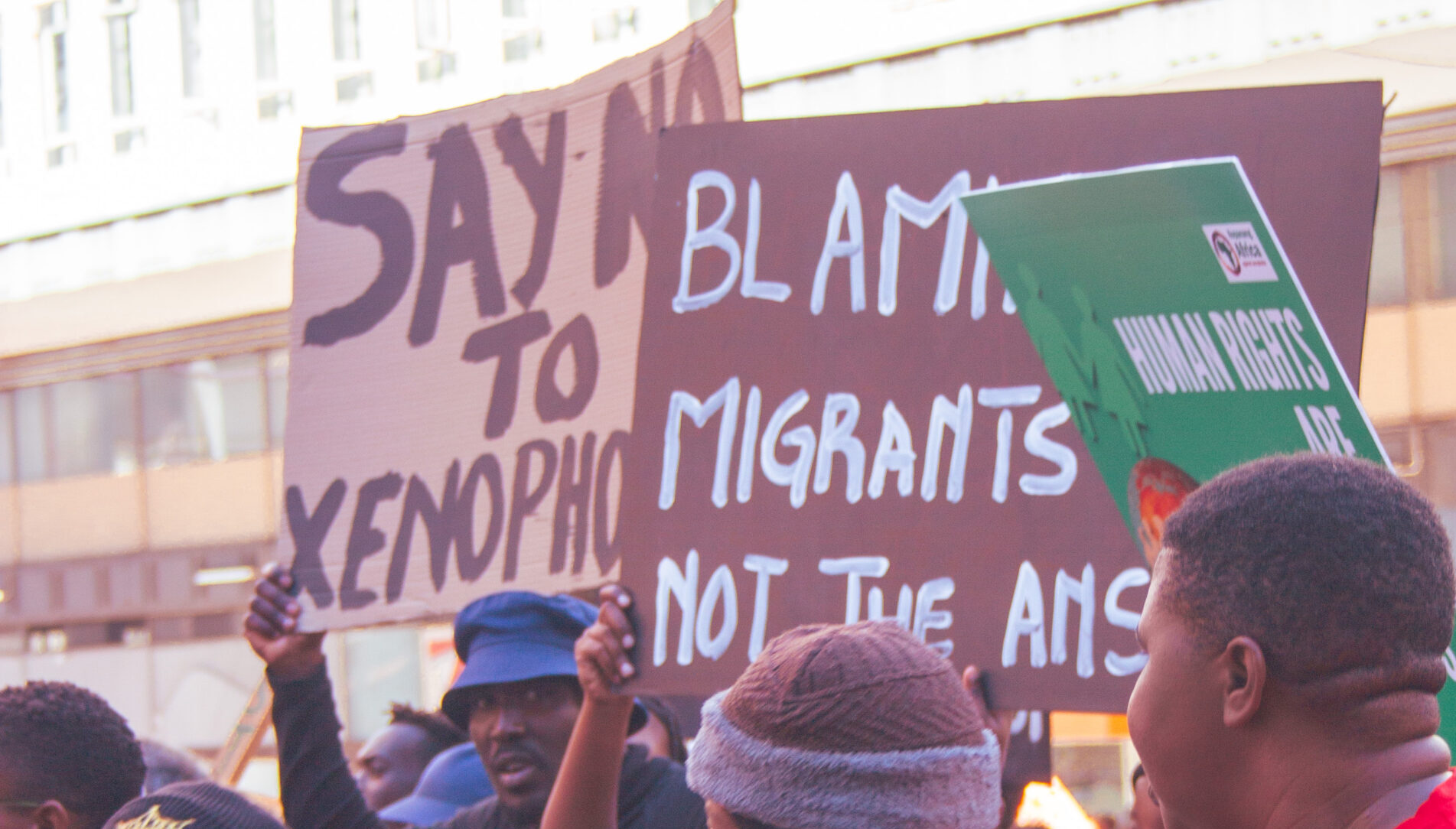
This is where the political danger lies. When unemployment, failing basic service provision and public insecurity are channelled into suspicion of outsiders, the state’s own responsibilities fade from our view. The distinction between a migration crisis and a migration governance crisis is not semantic: the diagnosis determines whether our response is institutional repair or another cycle of blaming foreigners.
Teffo tells younger scholars to interrogate what they hear. We should take him at his word. His degrees do not exempt his claims from verification. His status as a commentator or a practitioner does not override the Constitution. And his concern for sovereignty does not justify portraying constitutional accountability as subversion. At a time of heightened hostility towards African and other migrants, arguments that rest on misstatements of law and unsupported collective suspicions can inflame an already dangerous climate.
South Africa needs neither open-border romanticism nor a politics of suspicion dressed as legal expertise. It needs competent, lawful migration governance. A country cannot build that governance by misreading its treaties, disparaging its courts or blaming people whose rights the Constitution requires the state to respect.
End