
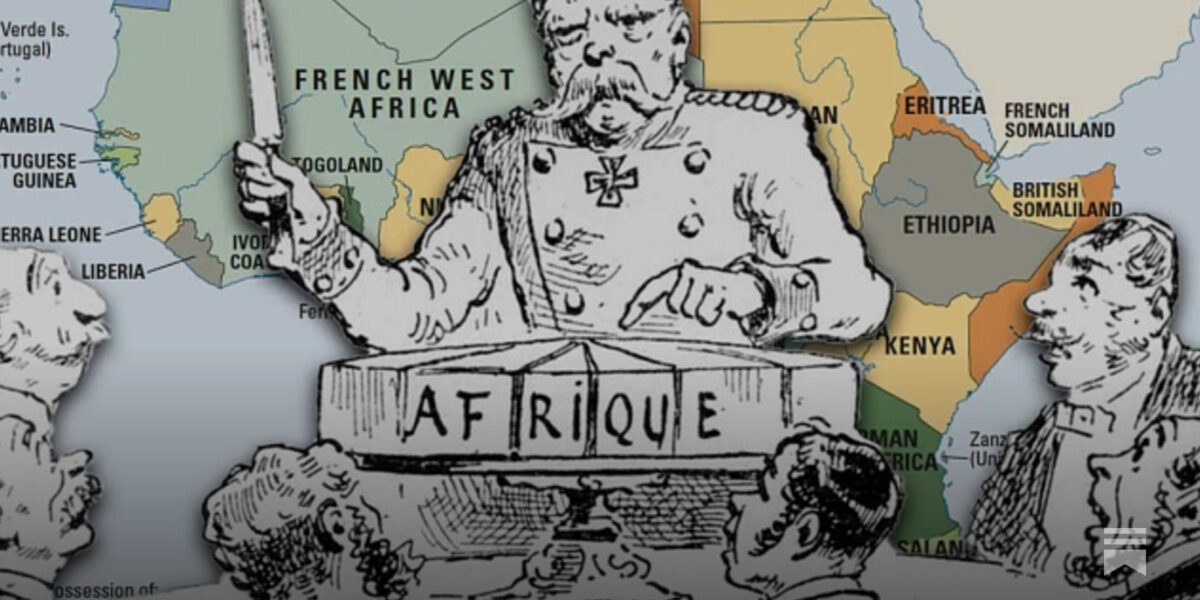
In 1884, at the Berlin Conference convened under Otto von Bismarck, European powers partitioned Africa into territorial units that bore little relation to its social, political, or economic realities. Borders were drawn on maps in distant rooms, cutting across communities, trade routes, and systems of mobility that had long defined the continent. These lines were never neutral. They were instruments of control.
Post-independence Africa inherited these borders, often reluctantly. The 1963 Organisation of African Unity (OAU), and later the 2002 African Union (AU), upheld their preservation – not because they reflected legitimacy, but to avoid further conflict. At the same time, both institutions have consistently articulated a broader vision of Pan-Africanism – one that recognises the historical interconnectedness of African societies and the movement of people across the continent.
Yet as we commemorate Africa Day on 25 May, that vision sits uneasily alongside a very different reality.
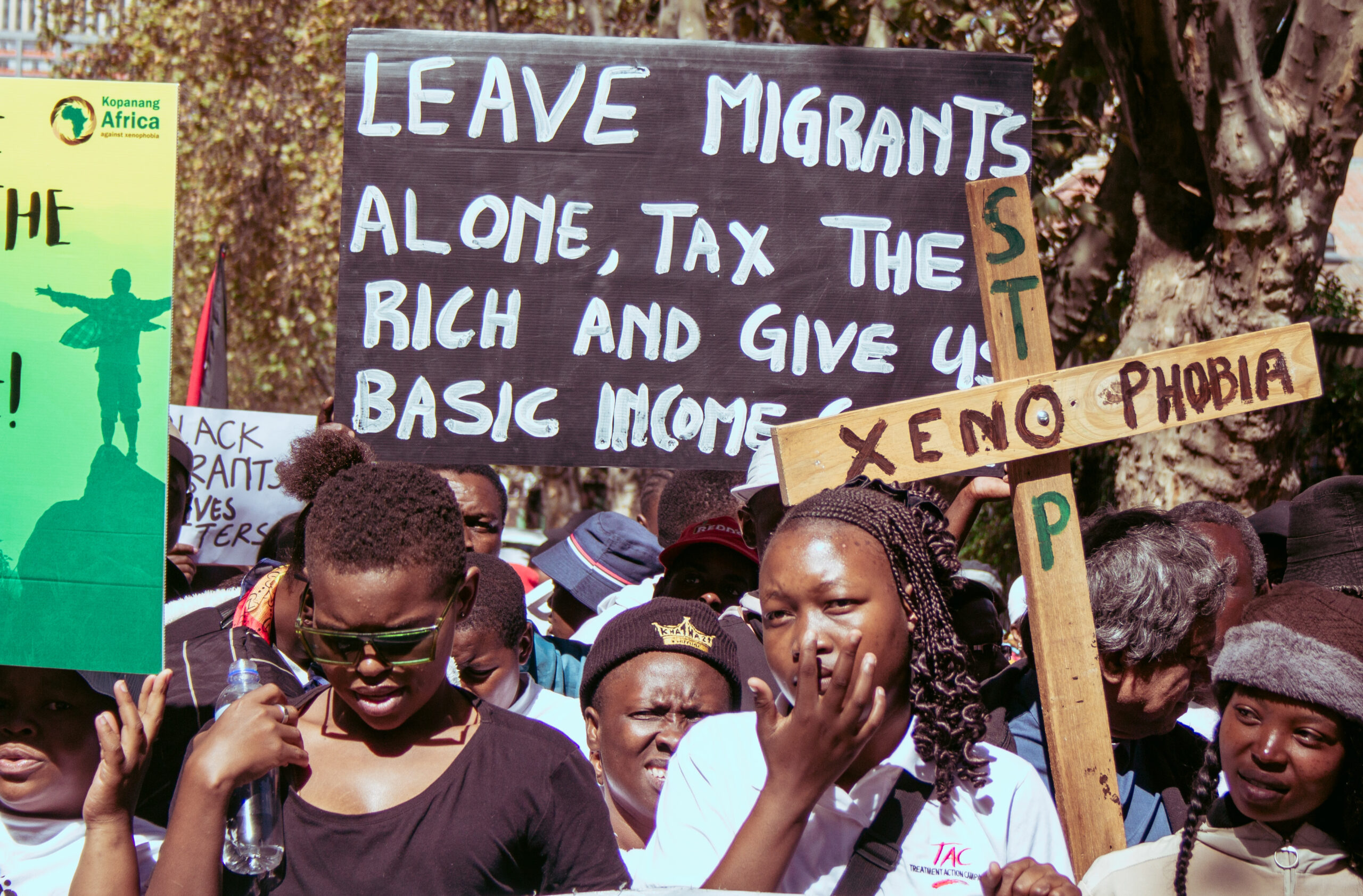
Across South Africa, some citizens are mobilising not against colonial borders, but in defence of them – calling for the expulsion of African migrants as though these lines, drawn in Berlin over a century ago, were natural, fixed, and beyond question. In this sense, public discourse perpetuates the idea of South African exceptionalism, instilled by colonial and apartheid architects who saw South Africa not only as economically superior but also as a ‘civilised’ outpost on the ‘dark’ continent. It points to the continuing violent legacies of an anti-black, colonial mindset.
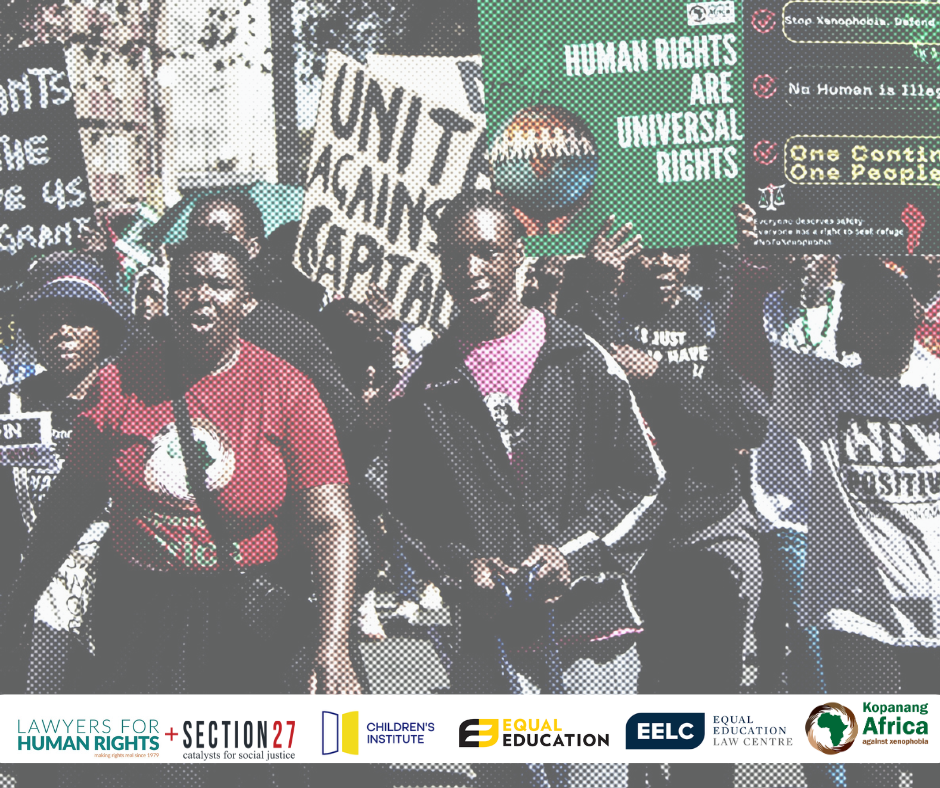
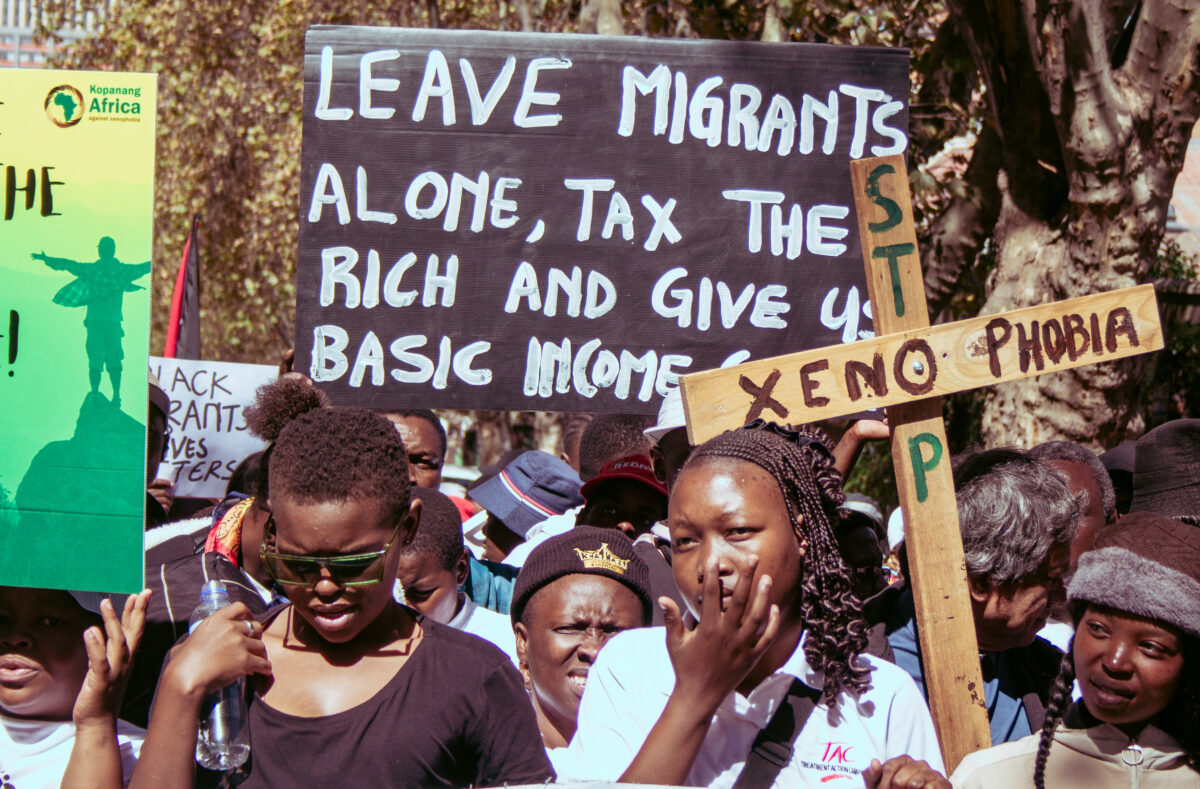
Social media is awash with messages from South African anti-immigrant and xenophobic groups and individuals demanding that African migrants leave the country before June 30. The dominant rhetoric is familiar: undocumented immigrants are blamed for unemployment, crime, failing public healthcare, and a collapsing education system. These demands follow a series of relatively small but widely covered protests across the country, led by ethnocentric formations such as March and March.
In this framing, migrants are increasingly depicted as a threat to sovereignty and socio-economic stability; assertions not supported by evidence. This narrative gains traction in a context where the crisis is real. South Africa has more than 23 million people living in poverty and an official unemployment rate of 32.7%, with more than 8 million people out of work. The crisis is even more acute among young people: unemployment reaches 60.9% for those aged 15–24, and 40.6% for those between 25 and 34.
Inequality is among the highest globally, with Gini coefficients ranging between 0.65 and 0.67. But this is precisely why scapegoating works. It draws legitimacy from real hardship while misdirecting its cause. Scapegoating is effective not because it is true, but because it offers a simplified explanation for complex structural failures. Its fraud lies in assigning responsibility to Black African migrants rather than to organised political and institutional breakdowns.
This phenomenon of scapegoating is not unique to South Africa. Similar dynamics are visible across the globe, for example, in the United States, Poland, and Colombia, where Venezuelan migrants have become targets of blame for socio-economic issues.
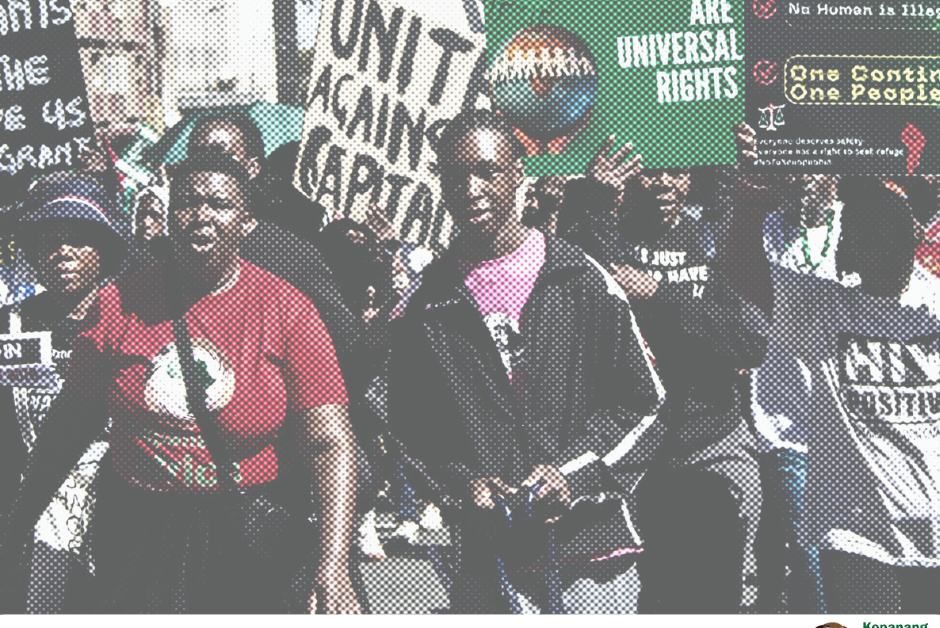
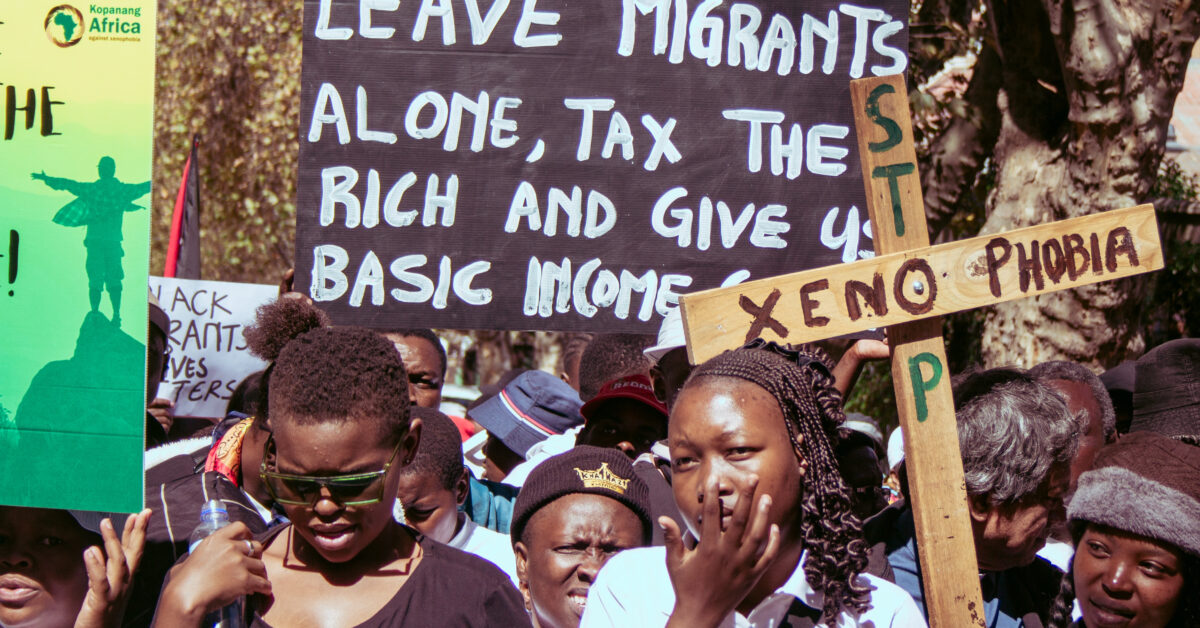
At the same time, resistance to this narrative and associated activity is growing in South Africa. Civil society formations such as Kopanang Africa against Xenophobia (KAAX) and Abahlali baseMjondolo, alongside progressive political actors, have pushed back against anti-migrant mobilisation. This suggests an important distinction: South Africans are not uniformly xenophobic, but xenophobia predominantly against Black African migrants is being actively produced, organised and mobilised within specific socio-political spaces. The development of the National Action Plan (NAP) to Combat Racism, Racial Discrimination, Xenophobia, and Related Intolerance in 2019 reflects this recognition, even if its implementation remains uneven.
To understand the present, however, we must confront a deeper historical contradiction.
South Africa’s position as the most industrialised economy on the continent was not built on a closed national labour system. It was constructed through a regional political economy of extraction, in which Black labour, irrespective of nationality, was mobilised across borders to sustain accumulation. This system operated both internally, through reserves and bantustans, and externally, through cross-border recruitment.
South Africa’s mining economy was assembled as a regional labour empire. Recruitment stretched across Southern Africa and depended on systems coordinated by institutions such as the Chamber of Mines’s Witwatersrand Native Labour Association (WNLA, known as Wenela) and the Native Recruitment Corporation (NRC), which in 1977 amalgamated into The Employment Bureau of Africa Ltd. (TEBA). Historical records show that recruitment reached hundreds of thousands annually from countries including Mozambique, Lesotho, Nyasaland (now Malawi) and Bechuanaland (now Botswana). In policy language, the White Paper on National Labour Migration Policy for South Africa (2025) openly concedes that labour migration has been central to the country’s economy “for centuries”, particularly in mining and agriculture.
This was not incidental. It was the model.
Circular migration, with African workers housed in hostels and employed on fixed-term contracts, was deliberately designed to sustain a system in which Black labour could be extracted and then returned to peripheral zones of social reproduction. Workers were recruited into urban-industrial centres and sent back to reserves, bantustans, or neighbouring states at the end of each cycle. The system externalised the social costs of labour while concentrating economic gains within South Africa.
For example, the 1964 labour agreement with Mozambique formalised this system, creating a regulated pipeline through which Mozambican workers were recruited under state supervision. These were not informal or accidental flows; they were legally structured, politically sanctioned and economically indispensable. In the 1970s, almost 80% of the Black labour force in South African gold mines were migrants from neighbouring countries.
Even after 1994, democratic South Africa inherited and maintained these frameworks, recognising bilateral labour agreements within contemporary immigration law. Agreements with Mozambique, Lesotho, Botswana, Swaziland and Malawi continued to provide mining with privileged access to foreign labour outside standard immigration channels. But with the increasing focus on local recruitment, the fall of the gold price and mine closures, many migrant workers, especially from countries like Mozambique and Lesotho, and their descendants were left with no choice but to return to South Africa and work as zama zama or take on other informal jobs to eke out a living and support their families. It is the more-than-a-century-long racial capitalist, extractivist migrant labour system, instituted by the settler-colonial and apartheid state, that built South Africa’s wealth.
Seen in this light, contemporary hostility towards African migrants is historically incoherent.
What this history reveals is straightforward but uncomfortable: migrant labour was never treated as a threat to South Africa’s development; it was central to it.
The wealth generated in South Africa’s mining economy depended on the controlled movement of Black labour across borders, with risks and social costs often displaced onto neighbouring societies. To now recast African migrant workers as intruders and “job stealers” is not simply inaccurate. It is a form of historical amnesia that obscures how deeply regional interdependence is embedded in South Africa’s economic foundations.
That amnesia is politically useful, but economically dangerous.
The same state that publicly honours the liberation struggle, rooted in pan-African solidarity and sustained by neighbouring countries, the Frontline States, continues to administer labour and migration systems whose regional foundations are rarely taught, acknowledged or debated honestly.
Xenophobia and Afrophobia, in this sense, are not only a failure of tolerance. They are also a failure of memory – despite the National Labour Migration Policy (2025) explicitly recognising that migration has long been central to South Africa’s economic development, even as it concedes the need to reform these systems for contemporary conditions.
And that failure matters.
Because when historical interdependence is erased, political responsibility becomes easier to evade. Structural crises – unemployment, inequality, institutional decay – are recast as external threats rather than internal failures. Migrants become visible. Governance failures do not.
This is the real danger of the current moment. Xenophobia is not simply a social reaction. It is a political strategy. It simplifies complex crises into narratives of invasion, allowing those in power to redirect accountability away from corruption, policy failure and institutional breakdown.
South Africa’s crisis is real. But its causes are not imported. In fact, immigrants contribute considerably to the South African economy as various studies have shown. In the informal sector, transnational African migrants contribute to the creation of employment and the transfer of skills to South Africans. A joint report by the OECD Development Centre and the International Labour Organisation (ILO) found that immigrants contribute about 9% to South Africa’s GDP. Stats SA equally acknowledges that immigration contributes to South Africa’s economic growth. Migrants, moreover, tend to spend about 85% of their incomes in their host countries.
The call for migrants to “leave the country before June 30” may sound decisive, even urgent. But it rests on a small minority of constructed voices as well as fiction. You cannot simply remove, on command, a population that has been structurally embedded in South Africa’s economy for over a century.
Migrant labour is not an external add-on to South Africa – it is part of its foundation. To demand its sudden disappearance is not policy; it is performance.
More fundamentally, it is an attempt to enforce, from below, borders that were imposed from above – lines drawn in Berlin in 1884 that were never meant to define African belonging in the first place.
As we observe Africa Day this month, the question is not only about migration – it is about memory. It is about whether we are willing to confront the histories of movement, labour, and solidarity that made South Africa possible, or whether we erase them when they become politically convenient scapegoats for crises they did not create.
To forget that history is not neutral. It is what allows scapegoating to flourish.
More fundamentally, it obscures a harder truth: South Africa’s economy has long depended on migrant labour – across mining, agriculture, construction, and informal trade – and continues to do so in ways that are often unacknowledged. To imagine that migrants can simply be removed is not only historically illiterate; it is economically incoherent.
Contact for Media Inquiries
Mike Ndlovu
media@kaax.org.za
+27 68 552 2510