


“Citizens First. Accountability Always.”
This is how March and March presents itself.
Its mission statement says the movement exists “to protect South African citizens, enforce the rule of law, and restore accountability through firm action, responsible governance, and the empowerment of communities”. It further claims to be rooted in fairness, national integrity, and a commitment to a future that serves those who call South Africa home.
At first glance, this sounds reasonable. Many South Africans are frustrated by unemployment, crime, corruption, failing public services and an immigration system that in many ways has become dysfunctional.
But the real test is not what a movement says. It is what it does.
By its own yardstick, March and March falls fails that test by a long shot.
Protecting South African Citizens?
March and March says it exists to protect South African citizens.
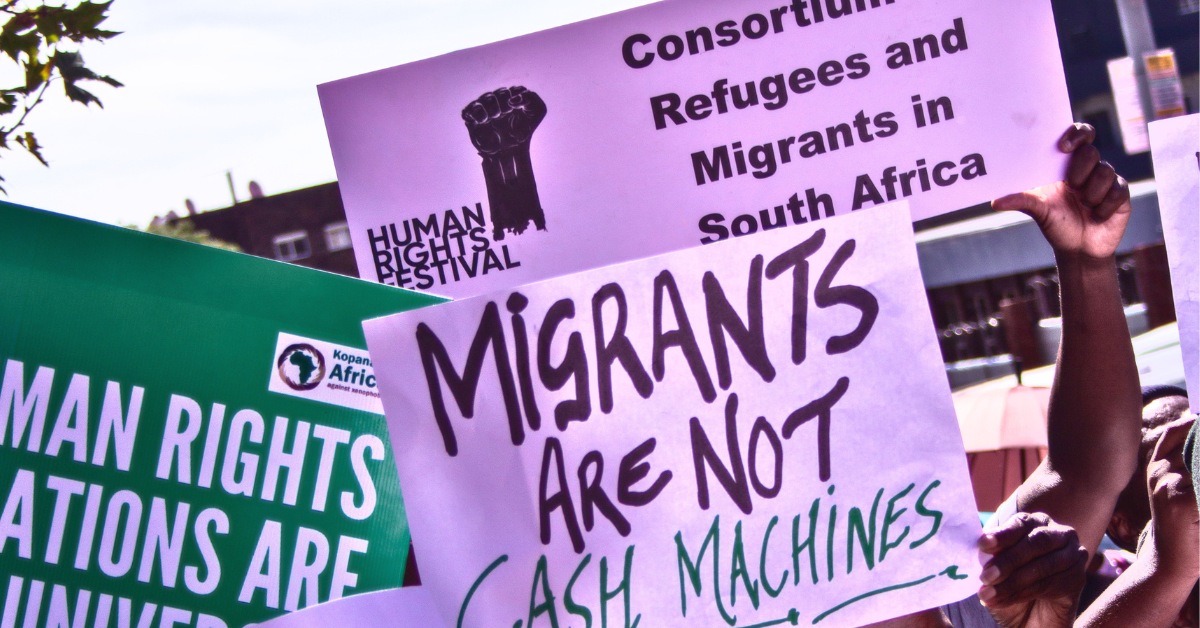
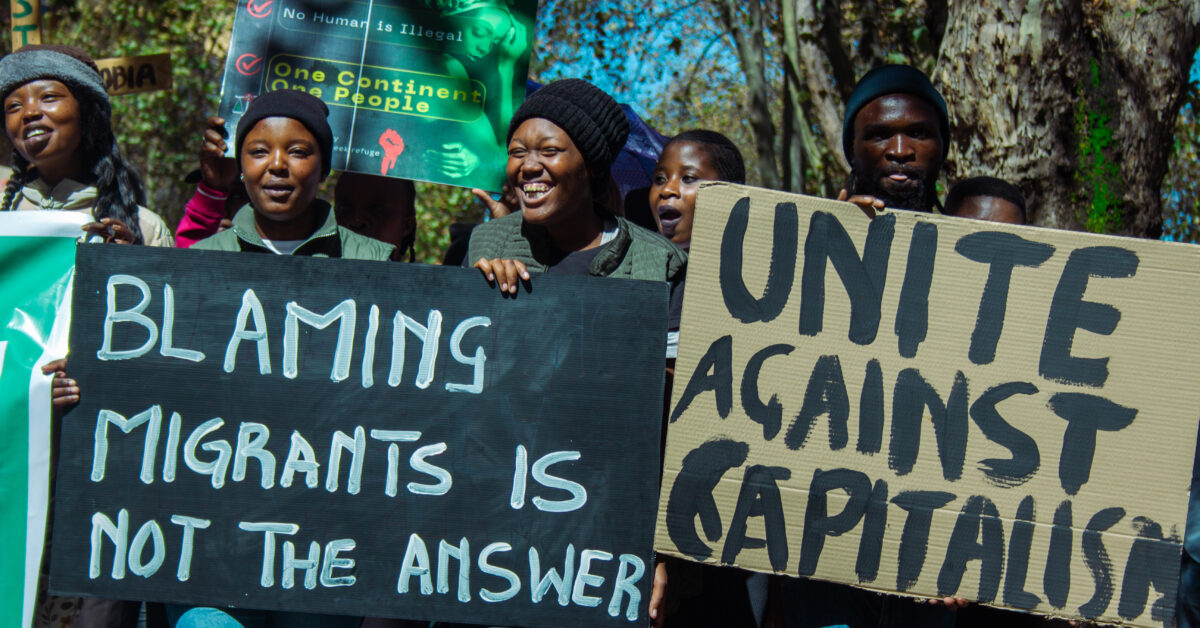
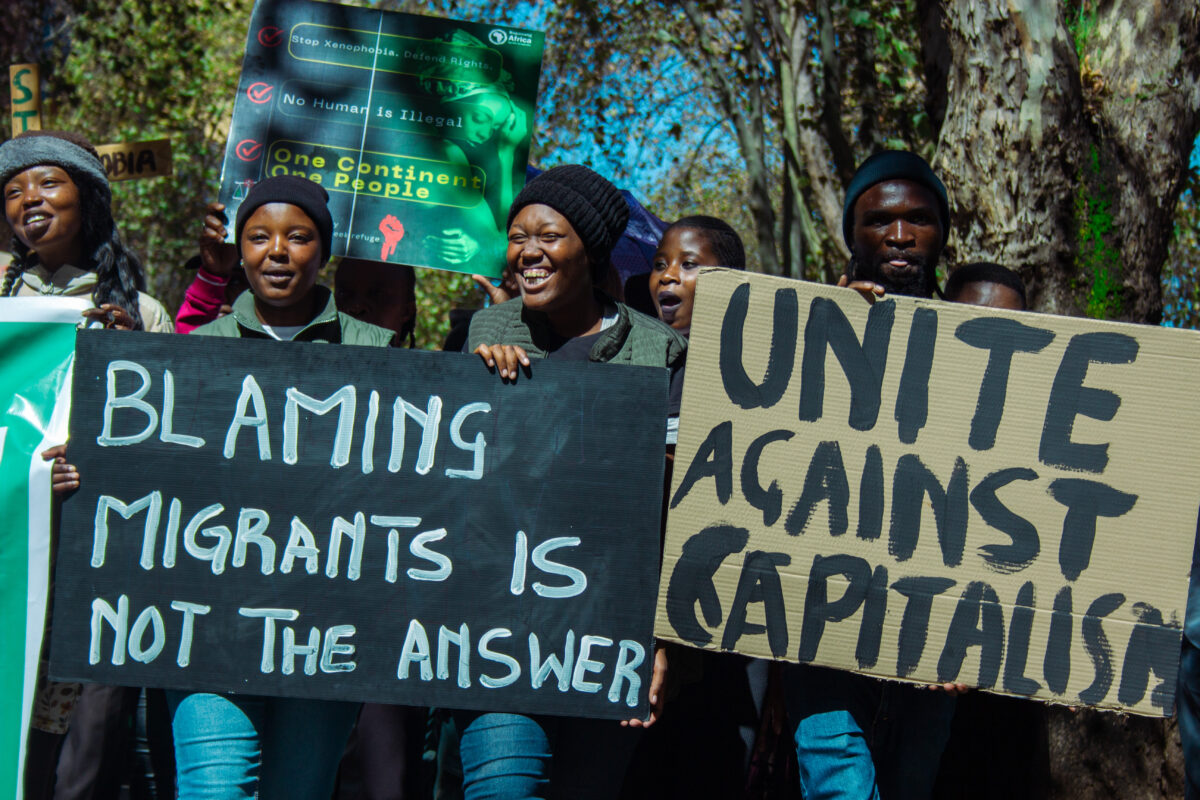
Yet anti-immigrant mobilisation has repeatedly harmed migrants and South Africans alike. Property is destroyed, businesses are disrupted, livelihoods are lost, and communities become less safe.
Since 1994, South Africa has experienced more than 1,300 xenophobic incidents, resulting in almost 130,000 displacements, more than 5,600 shops looted, and nearly 700 deaths. During the May 2008 violence, about one-third of those killed were South Africans.
The idea that anti-immigrant violence affects only foreigners is simply false. Violence weakens communities, damages local economies, and undermines social cohesion.
Enforcing the Rule of Law?
March and March also claims to enforce the rule of law.
This is perhaps its greatest contradiction.
South Africa is a constitutional democracy. Immigration enforcement is the responsibility of the state, not private groups, street patrols, or self-appointed community formations.
March and March has no legal authority to stop people, demand documents, determine immigration status, remove traders, or issue ultimatums to migrants. Doing so is not law enforcement. It is vigilantism.
The Constitution guarantees equality before the law, human dignity, freedom and security of the person, privacy, and just administrative action. These protections apply to everyone, regardless of nationality or immigration status.
A movement cannot claim to defend the rule of law while the core of its actions consistently violate that law.
Restoring Accountability?
March and March says it wants to restore accountability.
But accountability for whom? If South Africa faces a migration governance crisis, then the DHA must be central to the conversation. It is the DHA that presides over visa delays, asylum backlogs, administrative dysfunction, documentation uncertainty, and failures in adjudication. Corruption within parts of the immigration system has also been (widely) documented.
Many people labelled “illegal foreigners” are not simply individuals disregarding the law. Some are refugees and asylum seekers trapped in a system struggling with a backlog of more than 160,000 cases.
If accountability is genuinely the objective, why is so little attention directed at the institutions responsible for migration governance?
Why are migrants in townships and inner cities easier targets than the officials, systems, and political actors responsible for administrative failures?
Responsible Governance?
March and March claims to stand for responsible governance.
Yet its politics often capitalise on governance failures rather than addressing them.
Where the state is weak or absent, the movement increasingly presents itself as an alternative authority. That should concern all South Africans.
Responsible governance means strengthening institutions. It means improving immigration administration, tackling corruption, reducing backlogs, strengthening labour inspections, and holding exploitative employers accountable.
It does not mean allowing self-appointed groups to police communities according to nationality. The concern becomes even greater when movement leaders issue so-called “deadlines” for migrants to leave the country. No private organisation has the constitutional authority to issue any such ultimatums. Immigration enforcement, status determination, and deportation are state functions that must occur through lawful processes.
Empowering Communities?
March and March says it seeks to empower communities.
But which communities?
Who authorised the movement to speak on their behalf? What mandate does it hold?
South African communities are not homogeneous. They include citizens, migrants, refugees, asylum seekers, permanent residents, employers, workers, traders, religious organisations, and civic groups.
To claim to represent “the community” while excluding those South Africans who disagree with them and those who live our country who are deemed foreign, is not community empowerment.
It is a form of exclusionary politics that sits uneasily with a constitutional democracy founded on equality, dignity, and inclusion.
Fairness and National Integrity
March and March claims to be rooted in fairness.
South Africa already has a standard for fairness: the Constitution. The Bill of Rights protects equality, dignity, freedom, security, privacy, and just administrative action. These rights apply to everyone, not only citizens. A conception of fairness that protects citizens while disregarding the rights and dignity of non-citizens is not constitutional fairness.
The movement also claims to uphold national integrity. Yet anti-immigrant violence has repeatedly damaged South Africa’s standing across the continent. Countries including Nigeria and Ghana, as well as Mozambique and Malawi have expressed concern about the treatment of their nationals, while international figures such as the UN Secretary-General António Guterres and Tedros Ghebreyesus, the WHO-Director General, have publicly condemned xenophobia in South Africa.
This is not a demonstration of national integrity. It is a reminder of how quickly intolerance can undermine a country’s reputation, something that Mmamoloko Kubayi, the Minister of Justice and Constitutional Development has admitted.
The Real Test
South Africans have every right to demand effective migration governance. They have every right to expect functioning borders, efficient administration, accountability from Home Affairs, and action against corruption and crime.
But none of these objectives require vigilantism, intimidation, or the targeting of minority and vulnerable groups.
The rule of law cannot be defended by breaking it. Accountability cannot be restored by scapegoating the powerless. Communities cannot be empowered by dividing them.
If March and March wants to be taken seriously, it should be judged not by its slogans, but by its conduct. By that measure, it fails its own mission statement.
Ends