

Attention:
President of South Africa: President Cyril Ramaphosa
Email: president@presidency.gov.za
Minister of Home Affairs: Dr Pakishe Aaron Motsoaledi
Email: minister@dha.gov.za
cc. sihle.mthiyane@dha.gov.za, mogambrey.nadassen@dha.gov.za, and
mamokolo.sethosa@dha,gov.za
Dear Mr. President and Honorable Minister,
Subject: Setting the Record Straight – Implementing the final White Paper on Citizenship,
Immigration and Refugee Protection is not the right way to go
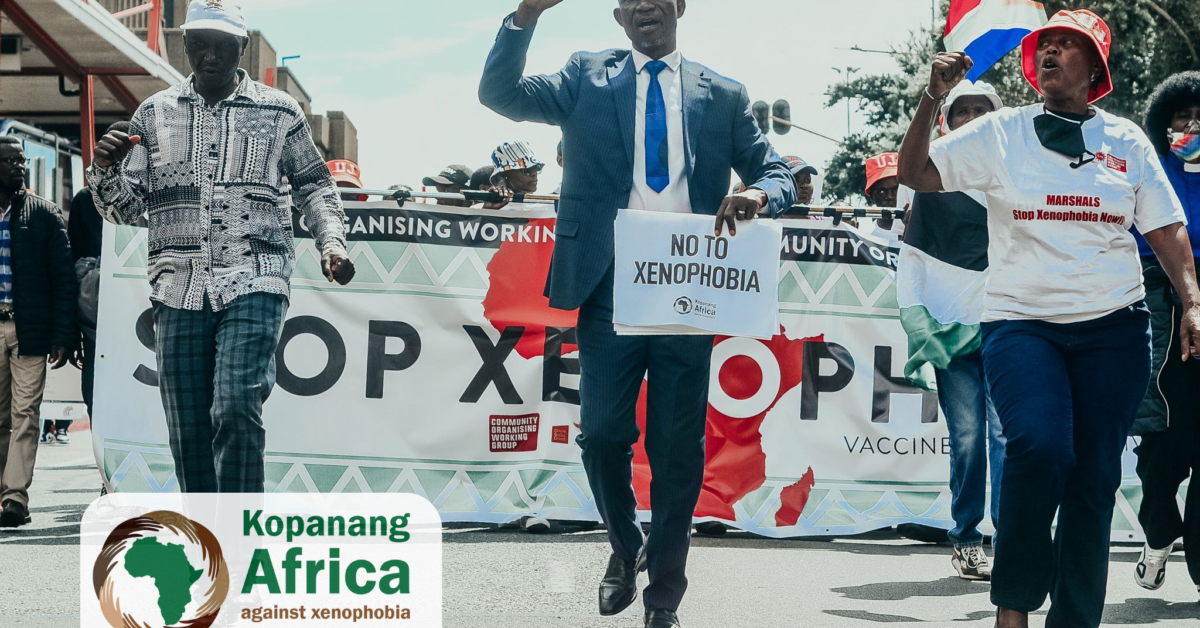
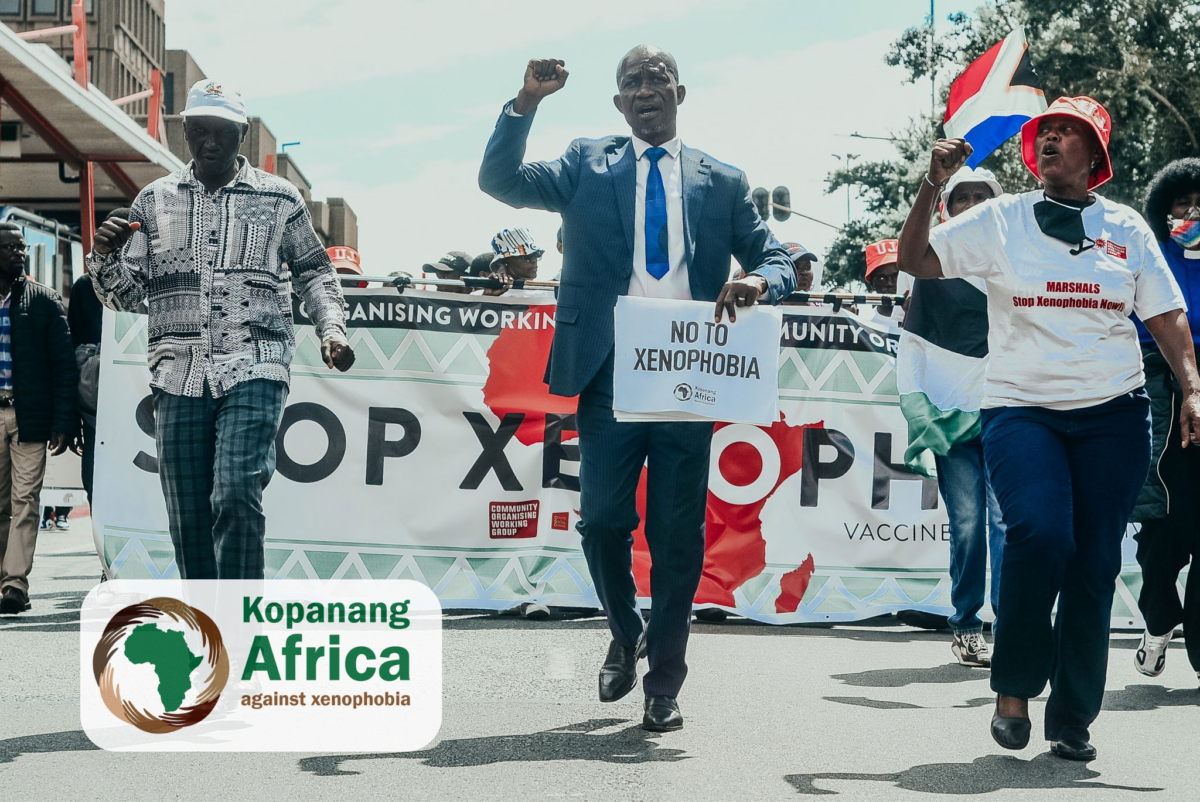
We, together with 115 organisations from across South Africa and the broader African
continent, representing diverse sectors including human rights, social justice, faith based
and community development organisations, strongly oppose the recently released final
White Paper on Citizenship, Immigration, and Refugee Protection and call for its withdrawal.
This White Paper proposes radical changes to South Africa’s legal framework on migration
and citizenship, including withdrawing from the 1951 United Nations Refugee Convention.
Such a move would be unprecedented and regressive, undermining the values and
principles enshrined in our Constitution. South Africa’s commitment to human rights and
dignity must not be compromised.
If South Africa were to withdraw from the 1951 convention, it would mark an unprecedented
and regressive step. But this is consistent with the DHA and its corrosion of the values, ethos
ideals enshrined in the South African Constitution. The litany of litigation cited in the White
Paper bears testimony to this. Ironically the majority of forcibly displaced people including
children seeking refuge in South Africa do so because of the global perception of the nation
being that of respect for human rights and respect for human dignity. At the dawn of this
democracy South Africa was recognized as a beacon of hope, championing human rights and
respecting human dignity.
South Africa’s history of apartheid led to the marginalisation and disenfranchising of amany
black communities in South Africa with poor schooling curriculums, very little access to health
care and a lack of freedom of movement. Its current commitment to the provision,
promotion, and upholding of human rights has garnered global respect, exemplified by the
recent case brought before the International Court of Justice against Israel in defensive ofPalestinians, where South Africa’s stance was a testament to its dedication to justice and
human rights. After Nelson Mandela was freed from prison and became South African
president, he said: “We know too well that our freedom is incomplete without the freedom
of the Palestinians”, and later wore a traditional keffiyeh to a pan-African event in Algeria in
In other words, because of South Africa’s own history of systemic oppression, South
Africa thwarts prejudice or othering.
In response to the UNHCR’s observations on the draft White Paper, it is highlighted that
withdrawing from the 1951 Convention and its 1967 Protocol and re-acceding with
reservations, particularly regarding access to employment, education and freedom of
association, would signify a significant departure from South Africa’s leadership role and its
support for a norm-based international system. What the Minister also fails to highlight is that
if South Africa withdraws, there is no obligation for it to re-accede.
What the DHA fails to realise is that the rights which it wishes to set reservations on, are non
derogable. A non-derogable right is one whose infringement is not justified under any
circumstances. The South African Constitution provides a table of non-derogable rights which
include the right to equality, human dignity, life, freedom and security of person, rights of
arrested, detained and accused persons, children’s rights and the right to protection against
slavery, servitude and forced labour. These rights i.e education, health care, citizenship, birth
registration, social security; are all rights that are inextricably linked to the rights to equality,
dignity, freedom and security of person.
The Minister suggests that South Africa lacks the resources to ensure access to socio
economic rights for refugees and asylum seekers, hence the intention to withdraw. However,
data from the Department of Home Affairs (‘DHA’) reveals that there are approximately
144,512 asylum seekers and refugees in South Africa, constituting only 0.2% of the country’s
total population of 60.6 million. By contrast, Uganda hosts 1,611,732 refugees and 48,972
asylum seekers, despite having a significantly lower GDP than South Africa. Additionally, the
Minister in saying this about South Africa’s inability to cater socio economic resources to
migrants, makes sweeping statements regarding portfolios outside of his own without
providing data or statistics from those Departments attesting to this. And we simply cannot
accept this. The Minister’s suggestion that refugees and asylum seekers are the reason for
the South African government failing to provide resources to citizens is thus false and
disingenuous.
The White Paper proposes the adoption of the “first safe country principle”. This is not only
contrary to the principle of non refoulment but also the Customary International Human
Rights principle to share responsibility with other host countries. It is crucial to remember
that signatory countries to international conventions have committed themselves to
upholding international human rights law, including the principle of non-refoulement, which
prohibits the return of individuals to countries where they may face torture or other forms of
harm. Is South Africa prepared to disregard this principle?
The resources allocated to the process of formulating this White Paper and the various
processes is in itself a reflection of the extent of mismanagement. The DHA is aware that the Constitution enshrines a principle of accountability in terms of which government can be held
accountable for particular aspects of its policy, particularly those which fail to pass
constitutional muster. It calls on the DHA to reflect upon the implications of whether its
conduct complies with the highest standards of human rights. And it is obvious that this piece
of policy will not withstand the test of constitutional compliance.
Presenting the White Paper as a government policy document, the Minister, as referenced in
the White Paper, is implementing the ruling party’s resolutions on this matter, aiming to
overhaul the Citizenship Act, Refugees Act, and Immigration Act to address new challenges
facing South Africa.
While electioneering is underway in South Africa, it is unfortunate that the State resorts to
measures that mislead its citizens, perpetuating the false narrative that foreign nationals are
responsible for job scarcity and social issues. The root causes of poverty and unemployment
lie in systemic failures to implement transformative policies. A universal income grant funded
by a wealth tax could alleviate the plight of the poorest and unemployed.
The politicization of immigration issues by the DHA is deeply concerning, as it exacerbates
xenophobia and further divides communities. The White Paper serves as a facade behind
which a dysfunctional and crisis-ridden department seeks refuge.
It is important to note that the current asylum protection system is in disarray, primarily due
to a lack of capacity, resources, and widespread corruption within the DHA. The solution to
these problems does not necessarily require policy reform. Rather it demands a concerted
effort to combat corruption and ensure procedural fairness, something that the White Paper
does not address.
The White Paper remains silent on how the systemic crisis of corruption and bribery within
immigration and law enforcement agencies will be addressed, perpetuating the cycle of
mismanagement and distrust.
The White Paper does not adequately address the crises of corruption within the DHA and
does not present evidence that creating a more restricted environment and mechanisms to
detain migrants at the borders will solve this crisis. Furthermore, the DHA gives no indication
of budgets that would be needed to implement this proposed new policy shift and how that
budget will be used to address the systemic challenges and corruption as presented to the
Minister in the Lubisi report.
Finally, the White Paper in its entirety fails to meet the threshold for a participatory
reasonable process. The short time frames imposed by the DHA for public participation were
stringent despite the DHA extending it to an additional month. The reason being that the
DHA has conducted public provincial consultations, however, invitations and information on
these consultations was not easily accessible. Furthermore, none of these consultations
involved children and youth, whose rights are also implicated by the proposals in the White
Paper. Child participation is one of the four cardinal principles of children’s rights. Children
have the right to actively participate in decisions, processes, programmes, and policies that affect their lives. The DHA has failed to ensure this consultative process takes place. In Iron
Steel, the Constitutional Court held that:
“South Africa is a constitutional democracy that upholds representative
and participatory democracy. The purpose of public participation and
involvement in democratic processes is primarily to influence decision
making processes that affect the will of the people. Public participation
is premised on the belief that those who are affected by a decision have
the right to be involved in the decision-making process. Central to this
is the acknowledgment that institutions with decision-making powers
must involve those who are likely to be affected by such decisions.”1
It is on this basis the we call on the DHA to withdraw the White Paper and to expend its
resources to addressing the crises facing this DHA in a productive and inclusive manner.
Sharon Ekhambaram
For Kopanang Africa Against Xenophobia
For more information from media, please contact:
mike@transforming.org.za
Endorsed by:
- #Sharp ecosocialist collective
- 350Africa.org
- Abahlali basemjondolo
- Active Citizens Movement (ACM)
- Adullam Art
- Africa Refugee Social cooperation
- Africa Revival Foundation
- Africa Unite
- African Diaspora Forum (ADF)
- African Diaspora Workers Network (ADWN)
- African legal Students Association and Justice Chapter
- African Refugee and Migrants Aid (ARMA)
- African Solidarity Network
- Ambazonia Governing Council /Ambazonian Community in Cape Town
- Angels Nest SA
- Be True 2 Me
- Beautiful Rubies
- Bridging The Gap Botswana
- Centre for Faith and Community
- Chronicles of Refugees and Immigrants
- CONGOLESE COMMUNITY OF QONCE (CCQ)
- Congolese Community of Refugees in Port Elizabeth (CCRPE)
- Consortium for Refugees and Migrants in SA. [CORMSA]
- Equal Education Law Centre
- Extinction Rebellion Gauteng
- Fathers in Africa
- Foundation for Human Rights (FHR)
- Galore Sport
- Gauteng EPWP Forum
- Gauteng Informal Development Alliance
- Gauteng Refugee Job initiators
- Gihozo Cultural Group
- Grace communion international
- Greater Eldorado Park United Civic
- Hashtag Insolidarity
- Healing Nation Forum
- Hope4Health NPO
- Human Rights Education Centre
- INDLOVUKAZI INTSIKA zeSizwe
- International Labour Research and Information Group (ILRIG)
- Ithuba Lethu Recycling
- JASS Southern Africa
- Johannesburg Migrants Advisory Panel (JMAP)
- Kapok Resudents Association
- KB Foundation
- Keep Left/Socialism
- Khulumani Support Group
- Kivu Solidarity for All
- KwaMhlanga Refugee Association
- Lawyers for Human Rights (LHR)
- Light Of Hope For Africa (L.I.H.F.A)
- Marshall Town Fire Justice Campaign
- Marxist Workers Party
- Migrant Workers Network Botswana
- Migrant Workers Union
- Migrants and Refugees in SA prisons Support Network
- Neighbours NPO
- Network for Immigrant Rights & Responsibilities in South Africa (NIRRSA)
- Nobuhle Virgie Foundation
- North West House of Refugee
- Nyema Foundation
- One Voice of all Hawkers Association
- Ordinary activist
- Oromo Community SA
- Palestine Solidarity Alliance
- PASSOP- People against Suffering, Oppression and Poverty.
- Pax Afrika Network
- Phoenix Foundation of Zimbabwe
- POWC-Arise and Shine
- Rainbow Refuge Africa
- Reedeming hope for the disabled (RHD)
- Refugee Children’s Project (RCP)
- Refugee Migrants Support Centre
- Refugee Social Services (RSS)
- Refugee women Interhelp (RWI)
- Refugees and Migrants Platform (RMP)
- Rwandan platform for Dialogue, Truth and Justice
- SA BDS Coalition
- SACBC Migrants & Refugees Office and Human Trafficking
- Scalabrini Center of Cape Town
- Siyagunda Association
- Socio Economic Rights Institute (SERI)
- Somali Association of South Africa (SASA)
- Somali diaspora forum (SDF)
- Somali Leaders Association of South Africa
- Sophiatown Psychological Services
- South African Refugee Led Network (SARLN)
- Southern African Human Rights Defenders Network. [SAHRDN]
- SSOE Support Stick of Old Exiles
- Synergie de la diaspora Congolaise pour le Développement
- Team on the move
- The Migrants Workers Union
- The People’s General Foundation
- The Symphonies Organization
- Thembelihle Crisis Committee
- Three2Six -Refugee Children’s Education Project
- Treatment Action Campaign (TAC)
- Triangle Project
- Tshwane Leadership Foundation
- Ubuhle bomusa foundation
- Umbrella of Eritreans justice seekers in South Africa
- Umoja for Africa
- Umoja Foundation
- United Front
- Voice of Azania
- We are Church
- WOMEN AND CHILDREN EMPOWERMENT PROJECT(WCEP)
- Women in Diaspora Association (WIDA)
- Women In Need Organisation – WIN
- Women on Journey SA
- Workers’ World Media Productions (WWMP)
- Yetu Infotech Collective
- Youthful Freedom Foundation
- Zimbabwe Exiles FORUM (ZEF)
- Zimbabwe Migrants and Refugees Support Network